Creating Your First EPD: 5 Lessons From Practitioners Who Have Done It
We recently finished the first pilot of our EPD Practitioner Training. It was a programme that had been almost one year in the making.
Before developing it, we spent months speaking with sustainability professionals, interviewing potential customers and trying to understand what kind of EPD training was actually needed. We knew there were many professionals who already understood Life Cycle Assessment (LCA), but who were less confident when it came to developing Environmental Product Declarations (EPDs). We were also approached by two experienced EPD experts, who knew this market much better than we did and were concerned about the quality of many of the EPDs they were seeing. They were eager to develop practical training that could help address this problem.
We thought there was a need for more practical training. But thinking there is a need and knowing there is a need are two different things. We genuinely didn't know if the market would agree with us.
When we opened registration for the pilot, we had only 10 places available. They sold out in less than six weeks.
That was our first strong indication that we were probably addressing a real problem. The second, and more important, indication came when we actually ran the programme and saw what participants struggled with, what they learned and how their confidence developed.
I am sharing this because I don't think the interesting story is that we successfully ran our first EPD Practitioner Training. What is much more interesting is what we learned from spending almost a year researching the need for the programme and then seeing those assumptions tested with a real group of professionals.
During that year, we kept coming back to one question:
What does it actually take for an experienced LCA practitioner to become confident producing verification-ready EPDs?
The pilot gave us a chance to see that transition in practice.
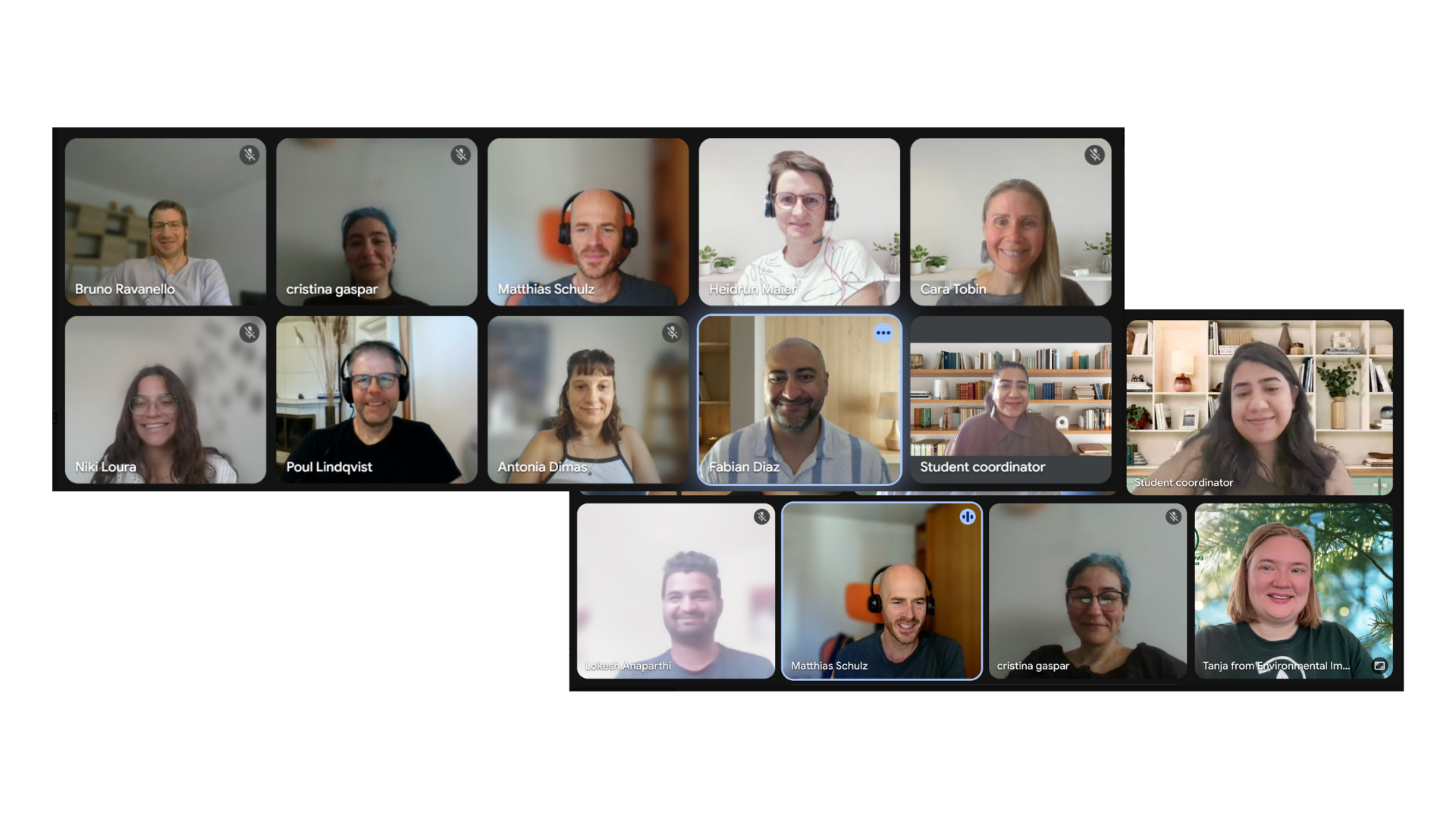
The Pilot group of EPD Practitioner Training met once a week to discuss their EPDs and what they have learned that week
EPDs are more complicated than they first appear
One participant summarized their main learning like this:
“EPDs are more complicated than they seem, but still very doable with a bit of effort.”
I think this describes the situation quite well.
An EPD is based on an LCA, so if you are already an experienced LCA practitioner, you have a very good starting point. However, the LCA is only one part of developing an EPD.
You also need to understand Product Category Rules (PCRs), General Program Instructions, documentation requirements, the relevant standards and verification. You need to make technical decisions and be able to explain and document why you made them.
None of these things are impossible for an experienced LCA practitioner. But there is a difference between understanding the principles and being confident enough to develop an EPD that you know is ready to send to a verifier.
This was one of the main gaps we wanted to address with the training . After the pilot, 100% of participants said the training provided the right level of challenge for their professional growth.
Knowing the theory is not enough
One thing became very clear during the research we did before developing the training: people were not asking us for more theory.
There is already a lot of information available about LCA, ISO standards, EPDs and PCRs. You can read the standards, study existing EPDs and learn about the different requirements. All of that is useful.
The difficult part is, however, applying it to an actual EPD project.
At some point, you need to make the decisions yourself. Which PCR should I use? How should I define the system boundary? Is this assumption reasonable? What needs to be documented? What will the verifier question? And what do I do when the answer is not completely obvious?
These questions are difficult to learn from a presentation. This is why every participant in the pilot worked on their own EPD. As one participant explained:
“It gives a detailed walkthrough of the entire EPD project from start to end.”
Another said:
“The program helps you work on a real EPD and get exposure to other types of EPDs and examples.”
Every participant submitted their EPD draft for review by our expert instructors. One participant went a step further and felt confident enough to submit their EPD for external verification immediately after finishing the programme.
For me, that was a very good indication that the practical approach was working.
A verifier sees your LCA differently
Another thing we wanted to include in the program was direct interaction with someone who actually verifies EPDs. This turned out to be very important.
When you do an LCA yourself, you know why you made certain choices. A verifier doesn't. They only have your model, documentation and explanations. This means that making a technically reasonable decision is not enough. The decision also needs to be transparent, documented and justifiable.
A verifier may ask: Why did you do it this way?
Being able to answer that question is an important part of becoming an EPD practitioner.
During the training program, participants could get this kind of feedback directly from experienced practitioners and verifiers. 86% of participants rated the instructors 5/5, and one participant described the experience like this:
“The instructors were highly competent and supportive throughout.”
Working with a verifier is not about learning the “correct answer” to every possible EPD question. That would be impossible anyway.
It is about becoming confident enough to make technically sound decisions, document them properly and explain why you made them.
We underestimated the value of learning together
One thing that surprised me was how valuable the discussions between participants became.
The pilot included professionals working with different products, companies and industries. Naturally, they did not all have the same questions. That turned out to be a very good thing.
A question about one participant's EPD could introduce an issue that another participant had never considered. People compared approaches, discussed technical decisions and saw examples from industries other than their own.
One participant described the live sessions like this:
“The live sessions were highly helpful and insightful. They provided a valuable space for exchanging information, validating existing knowledge, and generating further questions and ideas for potential new EPD management approaches and strategies within the company.”
I think there is an important lesson here.
EPD work is based on standards and rules, but it still requires professional judgement. And professional judgement develops much faster when you can discuss real problems with other people doing the same work.
What did the results tell us?
We obviously wanted participants to enjoy the programme, but that was not the main thing we wanted to measure.
We wanted to know whether they actually learned something useful and whether they became more confident doing EPD work.
The overall programme rating was 4.7/5. 100% of participants felt that the programme provided the right level of challenge for professional growth, while 100% also agreed that it provides a practical foundation for EPD work. 86% rated the instructors 5/5.
More importantly, every participant produced and submitted an EPD draft.
One participant summarized the experience like this:
“I would recommend this training because it provides a practical foundation for understanding EPD methodology and applying it confidently in real-world LCA projects.”
For me, the practical part is the most important. The objective was not that participants should simply know more about EPDs after the programme. The objective was that they should be better able to actually develop one.
The EPD landscape is also changing
There has also been an interesting development in the EPD world recently: ISO 14025 has been updated.
I won't go through the changes here, because that probably deserves its own article. But it is another good example of why working with EPDs requires more than learning one process and repeating it.
Standards change, PCRs change and program requirements change. Expectations around environmental information develop as well.
For an EPD practitioner, understanding the principles behind the requirements is therefore just as important as knowing the current requirements.
If there is interest, I can write another newsletter specifically about the updated ISO 14025 and what has changed.
What happens next?
We learned quite a lot from running the first pilot. Based on the participant feedback and our own observations, we have made some changes to the programme for the next cohort.
The next EPD Practitioner Training will take place in October, and registration is now open.
We will continue keeping the cohorts intentionally small. The discussions, individual questions and feedback on participants' own EPD projects turned out to be some of the most valuable parts of the pilot, and those things are difficult to do properly with a very large group.
If you already understand LCA, but are at the point where you want to become confident in developing verification-ready EPDs yourself, this training may be relevant for you.
You don't need to decide that based on this newsletter.
We have put together an EPD Practitioner Training syllabus explaining what the programme covers, how it is structured and what you will actually work on.
Download the EPD Practitioner Training syllabus
Have a look at it and see whether it matches where you are in your own EPD journey.
If EPDs are becoming relevant for your work but you are not ready to join the October cohort, you can also express your interest and receive information about upcoming cohorts.
If you already know that developing EPDs is the next capability you want to build, applications for the October EPD Practitioner Training are now open.
We are also currently offering a “Back to Work” discount for both the October and February 2027 cohorts. If you already know that the EPD Practitioner Training is the right next step for you, you can get 25% off when signing up by September 7th, or 15% off when signing up by October 5th. For the February 2027 cohort, there is also a 10% discount for registrations made by November 2nd.
The main thing I learned from our first cohort is that the step from LCA practitioner to EPD practitioner is not mainly about learning more theory.
You need the theory, of course. But you also need to develop an EPD, make the decisions yourself, have someone experienced challenge those decisions and become comfortable explaining why you made them.
That is where the confidence comes from.
Best Wishes,
Poul Lindqvist
Managing Director of Environmental Impacts Academy